On March 12, 2026, student leaders, faculty, and supporters took to the steps of the California State Capitol in Sacramento, California to advocate for improved funding, equitable access to education, fair faculty working conditions, and other reforms for community colleges.
The march, hosted by non-profit Student Senate for California Community Colleges (SSCCC), is part of a long-standing tradition of the organization—“March in March.” Each spring, advocates join at the State Capitol to march for the protection of California community college students’ rights. Often following a theme, the motif of this year was “Protecting Student Rights.”
The day began at Southside Park where protesters participated in informational sessions like “Know Your Rights: Dealing With ICE” and “Non-Violence Training.”
Student leaders went on to pay visits to representatives and staffers of the California State Assembly. Prior to these visits, leaders were given overviews of visit procedures and of SSCCC’s legislative priorities as an organization. Present at these visits were some of Contra Costa College’s student leaders.
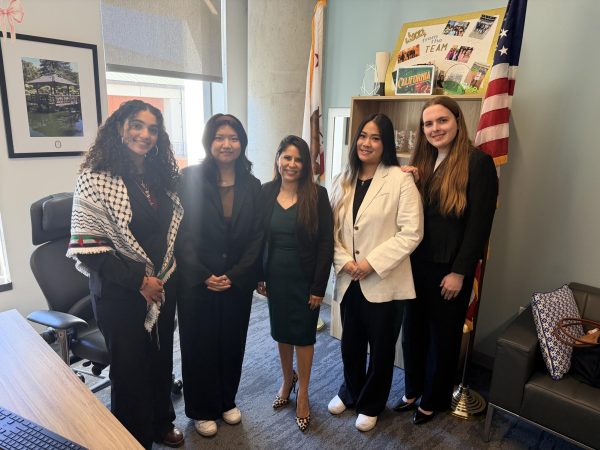
“It was both intimidating and inspiring,” Secretary for the Associated Students of Contra Costa College Max Stemmle said regarding the visits. “I didn’t really have much experience being in that sort of space before this, but getting to talk to the assembly members themselves and having them hear our concerns was really inspiring to me. I felt like my concerns were heard.”
From Southside Park, protestors marched to the West Steps of the Capitol as they advocated for institutional change across California community colleges and educational institutions as a whole.
Jannez Babista, the director of Parliamentary Procedure in Contra Costa College’s Associated Student Union, was present at the march. “It felt really empowering, you know. All these students from all over the state, all together, for one collective. It really inspired me to further my own efforts for change,” she shared.
Throughout the day, the SSCCC and its supporters endorsed several legislative proposals in preparation for the primary election on June 2, including Assembly Bill 713, which would allow undocumented students to work at California colleges and universities without censure.
Marchers also spoke out against certain bills, such as Assembly Bill 1705, which prevents California community colleges from offering remedial classes for students and instead places them in transfer-level English and math courses.
As the primary elections draw closer, the “March for March” event reflects student-led advocacy’s presence in politics—a theme that is sure to grow more prevalent as June 2 approaches.