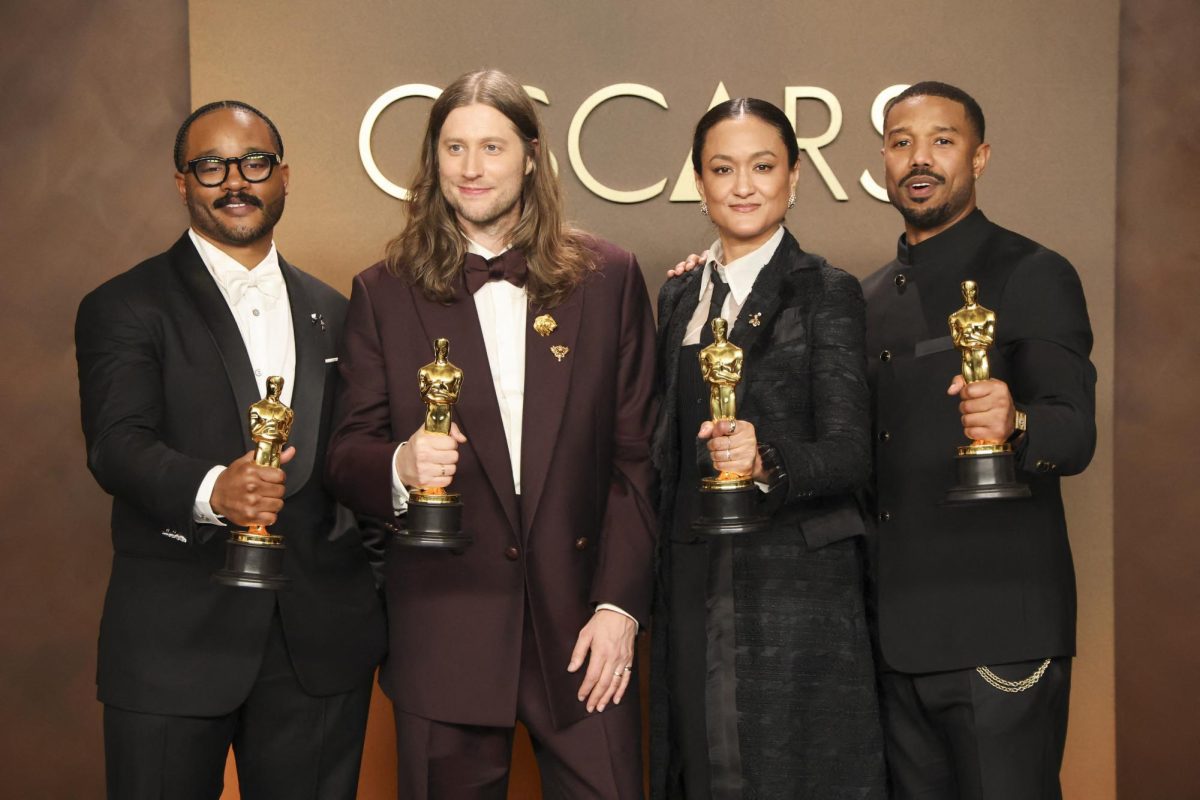
Going into the night, many expected Marty Supreme to win, especially after Timothée Chalamet picked up momentum across major award shows. Sinners took home the Academy Award for Best Original Screenplay, beating out Blue Moon directed by Robert Kaplow, It Was Just an Accident directed by Jafar Panahi, Marty Supreme directed by Ronald Bronstein & Josh Safdie, and Sentimental Value directed by Eskil Vogt & Joachim Trier. Coogler’s win proved something important. Real stories, told with truth and purpose, still matter.
When Ryan Coogler stepped onto the stage at the 2026 Academy Awards, he kept it real from the start: “Please sit down because I’m very nervous and they’re going to play me off. I grew up in Richmond, in Oakland, California and we can talk a lot.” At that moment, it was bigger than an Oscar for “Sinners.” It was the Bay Area standing on that stage with him. For those of us who come from the same places as Coogler, who understand that environment, that moment hit differently.
Coogler’s win represents more than individual success, it speaks of what can come out of communities that are often misunderstood. While many recognize him as an Oakland native, he was also raised in Richmond, California. As someone who comes from Richmond, there is a real connection there. This was a Bay Area win, as well as his win. Autumn Durald Arkapaw is a cinematographer raised in San Francisco and is of Black and Filipino heritage. Their work as cinematographers helped bring Sinners to life visually, adding depth to the story. Seeing two creatives from the Bay Area, both people of color, leading a project like this and being recognized at the highest level speaks volumes. Coogler’s career began at Saint Mary’s College of California, when his professor, Rosemary Graham, recognized his talent, reviewed his writing, and urged him to consider becoming a writer instead of a doctor. She responded, “You should think about becoming a writer instead of a doctor. Maybe you could even go to Hollywood and write screenplays.” At the time, Coogler admitted he thought she was “crazy,” but her words stayed with him.
Years later, he invited that same professor to the Oscars, where she watched him win. That moment proves that sometimes it only takes one person to recognize something in you before you can fully see it yourself.
Before Sinners, Coogler had already made his mark by writing and directing Black Panther, which grossed over $1.3 billion worldwide and became the highest-grossing film directed by a Black filmmaker. That film was more than a box office success, it was a cultural moment that showed Black excellence, identity, and creativity on a global scale in a way that had rarely been seen before.
His earlier film, Fruitvale Station, told the story of Oscar Grant and brought national attention to a tragedy that hit close to home for many in the Bay. That film showed early on that Coogler was committed to telling stories that matter, even when they are uncomfortable.
Students from African-American 120 here at
CCC Contra Costa Community College reflected that same pride. Wanisha Hall described Coogler as a fellow “brother” from Oakland and spoke on how powerful it is to see someone from their community win at that level.
Mercedes Chanel, a first-year student majoring in African American studies said, “Coogler’s journey represents more than just personal success. It represents the possibility.” Said Chanel, “For students studying the Black experience through film, seeing someone like Coogler win an Oscar reinforces the importance of our studies and the power of storytelling.”
Coogler’s work stands out because it is real, he does not water down his message or reshape his stories to fit expectations, telling it like it is. That authenticity is what connects with people and what continues to open doors for others.
Coogler’s Oscar victory opens that box completely. Seeing someone from your background achieve such a level makes a significant difference, because it changes your perspective on your own future. This victory is about rewriting history, creating opportunities, and demonstrating to the next generation that their tales are worthy of being heard.
Watching him on that stage, I felt pride. Not just for him, but for the Bay. For Richmond. For all of us who understand what it takes to come from these environments and still rise.