


On the edge of a California city where the land meets the Pacific Ocean, an Iranian born professor walks her gentle dog, stealing quiet moments before the noise of daily life takes over.
The stillness of the morning and the sound of birdsong form a sharp contrast with the intellectual storm brewing inside her, a conflict between the reality she lives and the identity that still lives within her. A war is being waged in her homeland, led by the very country where she moves through her days in quiet routine.
In the 1980s, she arrived in the United States with her family; a thirteen year old girl leaving Iran behind. Despite that, she feels that she never quite left. Decades of American life have not erased the image of Iran she carries in her memory.
Today, that image is at the center of a storm of questions and conflicting positions.
A community divided
The resurgence of the U.S. and Iran conflict over the past two years has exposed deep fault lines within the Iranian diaspora in the United States fault lines that cannot be understood apart from the history that brought each person to this country.
Those who left Iran before or immediately after the 1979 revolution were largely from the country’s elite doctors, engineers, and business owners who lived under the Shah’s secular, pro-Western monarchy and saw the Islamic Revolution as the end of the Iran they loved. Others in that same wave fled the authoritarian system itself.
Those who came in later waves, during the 1980s and 1990s, carried a different memory: one of repression, war, and the slow suffocation that followed the revolution. But they also carry a historical awareness of what foreign intervention has done to Iran. Among them, the moment the United States and Britain collaborated to overthrow Prime Minister Mohammad Mosaddegh in 1953, after he attempted to nationalize Iranian oil.
So today, when American bombs fall on Tehran, Iranians in the United States do not stand in the same trench. Some applaud what they see as a liberation long overdue, while others mourn a country being destroyed in the name of saving it.
Waiting for a signal
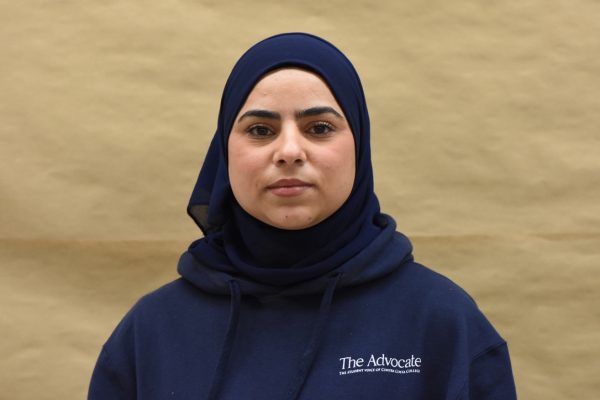
When the bombs started falling on Iran, Nooshi Borhan, a faculty member in the ESL department at Contra Costa College who has taught here for 25 years, didn’t know if some of her family members and friends were alive. She waited days, sometimes weeks, for a single message.
“There are times when we go for days without any news, and sometimes we get a message, and we’re like, oh thank God, they’re okay.”
Communication with family and friends inside Iran has been nearly impossible. Only those with expensive VPNs can occasionally send a message out.
One story from the previous round of Israeli strikes on Iran stays with her. A friend’s daughter was in her kitchen talking to her mother when her phone rang in the next room. She stepped away to answer it.
“The bomb fell on the kitchen.”
The daughter survived with injuries. For ten days, the family searched the rubble for her mother.
“Finally they found out she had died.”
Guilt, anger, and the indignity of war
Borhan described watching the news as its own kind of violence.
“You listen to the news and they’re talking about, ‘we’re gonna destroy this entire country, we’re gonna bring the whole civilization to an end.’ And as much as sometimes I try to tell myself, ‘oh, this is just rhetoric, they’re just talking,’ it’s still really impactful,” Borhan said.
She worries not only about lives, but about what is being deliberately destroyed.
“They’ve been attacking universities, institutes for research. They destroyed institutes for cancer research. Are they gonna just destroy all the cultural heritage?”
Borhan described her feelings during the war and said that the guilt follows her into the smallest moments of ordinary life.
“I was walking my dog and hearing birds sing, and I felt so guilty. Why do I get to listen to birds? And there are people in Iran, kids in Iran, who are hearing bombs,” Borhan said.
“I’m Iranian. That is the country that shaped who I am.”
A classroom breaks down
The morning after news broke of the Minab school bombing, Borhan walked into her classroom and could not hold herself together.
“I’ve taught here for 25 years. I’ve never started a class,” she said, her eyes filled with tears and couldn’t finish the sentence.
Borhan told her students what was happening, apologizing in advance for her distraction. They responded with hugs. One student, from Nicaragua, approached her afterward.
“Teacher, where is humanity?”
She paused. “I don’t know where it is.”
The other side of the divide
Not everyone in the Iranian community views the war through the same lens, and not everyone who supports it is doing so from a distance.
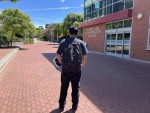
Eilia, a first year radiology student at Contra Costa College who asked that his last name not be published, said his family in Mashhad welcomed the strikes. “They’re really happy about the attacks because they’re attacking the government that enforced a lot of things that killed a lot of our young generation.”
When the home of one of Elia’s family members was hit by a missile, the woman told her relatives abroad that it was “a sacrifice for the people that passed away.”
Fadia, an ESL student at CCC who was in Iran as recently as January, and asked to change her name for her family’s safety in Tehran, described what she witnessed.
“The brutal Islamic Republic killed around 40,000 people in less than two days and arrested about 50,000, many of whom have since been executed. For three months now, no Iranian has been able to forget this major crime.”
The figure of 40,000 deaths was first cited publicly by the CIA, and was later repeated by U.S. and Iranian opposition sources. The death toll from the Iranian government’s crackdown remains broadly disputed. The Iranian government put the official toll at 3,117, while the U.S. based Human Rights Activists News Agency confirmed at least 6,634 deaths based on verified reports. Media outlets including Time, The Guardian and Iran International, citing local health officials and leaked hospital records, reported that between 30,000 and 36,500 protesters were killed during the peak days of Jan. 8 and 9. The United Nations said the true scale remains impossible to determine, noting a profound discrepancy between official figures and independent estimates. The arrest toll is equally contested. The Iran Human Rights organization estimated that at least 40,000 people, including children, were detained in relation to the protests. The U.S. based Human Rights Activists News Agency reported approximately 53,777 people detained as of Feb. 23, 2026. Independent verification of all figures remains impossible due to Iran’s near total internet blackout.
“This war is against the brutal Islamic regime and the IRGC, not against the people,” Fadia said. “But no matter how much we say this, our voices are either denied or silenced.”
Fadia pushed back directly at those calling for a ceasefire.
“Some people who have not the slightest understanding of the Middle East are calling to stop this war,” she said. “From the perspective of the people of Iran, this is actually a form of military assistance to the regime.”
Her closing words were a plea: “Please listen to the voice of the Iranian people, and do not, out of hatred for Israel and Trump, mistakenly stand against the innocent people of Iran.”
Elia echoed the same hope. “When Trump is directly aiming towards the Persian people and saying, we want to help the people of Iran, that makes me happier. It gives us hope for a free Iran.”
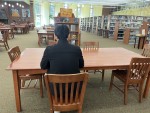
Faez, an Iranian ESL student at CCC who asked that his last name not be published due to safety concerns for family in Iran, offered a different dimension to the divide. As a Baha’i, a religious minority systematically excluded from Iranian public life, his experience of government oppression began long before the protests.
“I was a minority in religion in Iran, and I’m a Baha’i; the largest non-Muslim religious minority in Iran. We experienced very discrimination in these 47 years,” he said. “I don’t have an opportunity to go to public universities in Iran, because when you want to enroll, they ask what your religion is. When you say I’m a Baha’i, they don’t allow you.”
He recalled being turned away from a high school despite strong grades. “They started to enroll me, and after that they asked me, ” What is your religion? ” When I told them I’m a Baha’i, they didn’t enroll me.”
On U.S. and Israeli intervention, Faez was measured but clear. “Israel and the United States are paying attention to their benefits at first, like any country. But their benefits are in one way with Iranian people’s wills.”
Elia, Faez and Fadia draw a clear line between the governments and the people.
In a series of interviews with Iranian faculty and students at Contra Costa College, an Iranian who asked not to be identified expressed a different view.
The anonymous Iranian understands the hatred toward the government, but not the conclusion.
“I don’t like the government there either,” they said. “But I think that there’s so many problems with this idea of the U.S. or Israel or any country deciding who is going to be in what country, who are they going to take out, who they’re going to put in.”
The human cost of that divide is something her colleague carries daily. The Iranian described her coworker whose mother and sister live in Tehran whose heart breaks every time she hears fellow Iranians celebrate the strikes.
“She told me that every time she hears fellow Iranians talking about how great this is, she feels like her heart is torn into pieces even more and she’s sitting here waiting for news from her mother and sister and doesn’t know.”
History as context
The Iranian member pushes back on the idea that the war is simply about liberating Iran. She points to 1953, when the U.S. and Britain removed Iran’s democratically elected prime minister after he nationalized the country’s oil.
“There’s a reason we have the government we have now. It goes back.”
She worries that many, including some Iranians, are missing that context.
“Maybe people look at it without having a proper historical view. The history of Iran did not start in 1979 when the Islamic Republic came.”
The pattern, she said, is not new.
“They set countries back for generations. These wars, they demolish places, and then they start talking about how many billions it will cost to rebuild and who’s going to pay it is insane.”
She does not see a hopeful path forward.
“All it does is create cycles of hatred and future violence. When I see a picture of a Lebanese boy standing in the rubble and his entire family has been killed, it is impossible that this child will not grow up with a lot of anger and wanting revenge because that is what they’ve instilled in him.”
The silence of the institution
For the faculty, classified staff, and students from Iran the hardest part has not only been the war, but the silence of the institution they have served for over decades.
“There’s been a deafening silence around a lot of these issues, not only with regard to the current war against Iran, but also the war against Lebanon and Palestine,” an Iranian member at Contra Costa College said.
Contra Costa College’s strategic plan promises to “foster a culture where students and employees feel physically, psychologically, and emotionally safe in order to thrive,” and commits to “creating welcoming spaces that reflect and celebrate our communities’ diverse identities and cultures.” The district’s stated values center equity and belonging, with specific goals to “support holistic health amongst CCC students, faculty, and staff” and build “a strong sense of community cohesion.” there are faculty, classified staff, and students from Iran
Borhan said “it does not always seem like that is the case”.
“Yet when bombs began falling on Iran, a home country to a number of the college’s students and faculty; no statement came from the institution,” she said. “No acknowledgment. No mention of support services.”
“I’ve worked here for more than 20 years. I feel very saddened by the fact that this college and the district has not put out any statement. They don’t have to be political, they can just say that we acknowledge this is impacting the community, and here are some support services for students,” Borhan said.
“Silence is a statement. If you are silent on these issues, you are making a statement, or you are giving a message to people like me.” Borhan added.
Faez, who arrived in the U.S. last year, said the college’s silence had not gone unnoticed among Iranian students.
“I think if the college acknowledges the crisis that would be great, because it’s not a normal situation that the Iranians are experiencing,” he said.
College leadership responded via a spokesperson that the district made the decision in 2023 to no longer issue institutional statements regarding geopolitical conflicts.
“This decision, informed` by years of experience, came because statements, though well intentioned, often resulted in unintended harm that conflicted with our values of inclusion and safe belonging,” the statement read.
The spokesman explained the college’s position:
“We recognize that many of these situations involve profound humanitarian suffering, and we acknowledge the deep and personal impact such events may have on members of our globally connected community. Issuing statements on one situation, but not others would risk inconsistency and inequity. At any given moment, there are heartbreaking events unfolding across multiple regions, often simultaneously, and through differing perspectives.
Moments of global crisis can take a real emotional toll, and no one should feel that they have to carry worry, fear, or grief alone. CCC is committed to ensuring that students and employees have access to support, care, and connection during difficult times.”
Chancellor Mojdeh Mehdizadeh, who is herself of Iranian heritage and her family lives in Tehran, offered a personal reflection, noting, “As an immigrant with family both in the U.S. and Iran, the emotional toll is immense.”
Mehdizadeh continued, “This crisis has touched so many people in deeply personal ways. At the same time, I recognize that there is a wide range of political, cultural, and social perspectives within the Iranian and Iranian American diaspora, and beyond.
What history tells us
Hatem Bazian, a professor at UC Berkeley who specializes in the Middle East and diaspora politics, said the divide within the Iranian community in the United States is neither new nor random
“You’re seeing this split around the diaspora of the ’78-’79 revolution versus the diaspora at a later point,” Bazian said.
He explained that those who left before or immediately after the revolution of 1979, he said, came largely from Iran’s ruling elite and have spent decades shaped by outside forces.
“This diaspora from ’79 has been highly politicized by a whole CIA project, so many of these Iranian TV stations broadcast predominantly from Los Angeles, broadcasting to Iran,” he said.
Those who arrived later, hold a different view, he said. “They would not support U.S. military intervention; they see their engagement in changing the political landscape through internal processes.”
The figure of 40,000 people killed by the Iranian government was cited by two of the people interviewed for this story. We found that the number was first publicly stated by the CIA. Bazian said the figure is not supported by evidence.
“Perception is more important than reality,” he said. “The perception has created that this was a 40,000 death that, in essence, was stoking the ground to prepare to rationalize this illegal war against Iran.”
On whether Western military intervention has ever delivered the liberation it promises, Bazian was direct.
“The evidence just looks at the 20th century and into the 21st century the Western world always intervened to disrupt democracy, to cause further instability, to take over and ravage resources,” he said.
Discussing the institutional silence, Bazian said it is not coincidental. “The history of Western academia has always been committed to promoting colonialism, empire and domination. The fact that we think that the university is separate from the broader political structural elite is an illusion.”
Bazian placed the current conflict within a pattern stretching back more than a century. “The West has intervened in Iran since 1906, if not even before. We have enough historical record of Western intervention in Iranian politics that always resulted in preventing freedom, democracy, equality, right to their resources and today is no different.”
A war without a trench
In a follow up message, CCC faculty member Nooshi Borhan reflected on who had shown up for her during this time. The answer may surprise no one who has spent time in an ESL classroom.
“I have noticed how students, specifically ESL students, are so supportive, especially the immigrants who come from countries impacted by war. They have been so kind and so supportive, and they can understand exactly what I feel,” she said. “My students from Yemen were very kind and they came to me and hugged me and said they understood.”
One encounter stopped her completely. A former student from Ukraine spotted her across a hallway.
“She said to me, ‘I’ve been thinking of you, teacher,’ and she came over and we were both crying. I told her, ‘I know you understand what I feel,’ and she said, ‘I understand, teacher.’ She has lost people who are dear to her in the war in Ukraine, and we talked about how horrible it is to have war at all.”
The institution said nothing. But the students – the ones who had fled wars of their own – already knew what to say.
Kathleen Hargan • May 1, 2026 at 10:16 am
Thank you for a powerful and informative article. For those of us outside this community (even those of us who have friends within it), it has been difficult to understand the opposing views within the diaspora. Your article is both informative and respectful of the enormous pain felt on both sides. The heartbreak is real.