Plans for a 70-home development project near Marina Way South were approved after negotiations, permit denials and appeals dating back to 2023.
The Richmond City Council voted 4-0 to approve the housing project at their meeting on May 5. While Richmond’s Planning Commission had initially approved the project’s plans on March 5, two appeals made by the Trails for Richmond Action Committee (TRAC) and the developers themselves prompted a public hearing to reconsider the commission’s approval.
The Marina Point Residential Project, initially proposed by Guardian Real Estate on June 12, 2023, involves plans to build 70 single-family homes on an approximately 5-acre site in the Marina Bay neighborhood in Richmond.
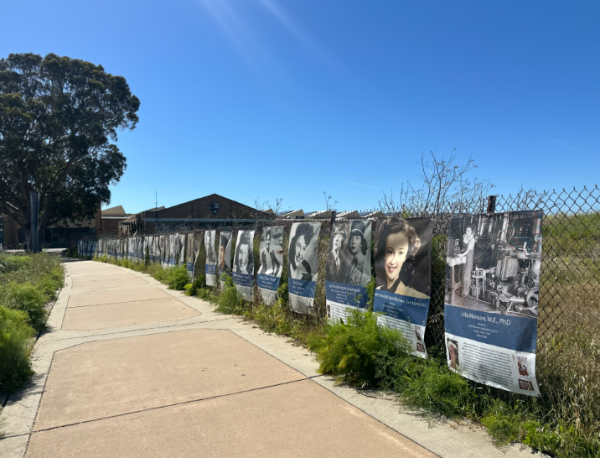
The housing project falls near the historic San Francisco Bay Trail which borders sites like the Richmond Marina, the former Richmond shipyards and the Rosie the Riveter Visitor Education Center. Being in such close proximity to the city’s treasured waterfront, the project endured careful analysis from TRAC—a volunteer organization dedicated to completing and enhancing the San Francisco Bay Trail within Richmond—who worried about the impact on public access to the Bay Trail and its subsequent maintenance.
The time for official considerations of the plan’s adherence to city building regulations, however, has long passed. The city of Richmond had 30 days to review the initial application submitted by Guardian Real Estate in June of 2023, a deadline that they failed to meet. Due to the city’s error, the housing project was deemed consistent with city regulations without passing through the appropriate review.
In a staff report on March 5, Planning Manager Avery Stark deemed the project “not consistent with the City’s General Plan, Housing Element, or adopted Housing Element Site Inventory,” an oversight that the city could no longer consider.
“You know, we are human, we will make errors,” said Director of Community Development Lena Velasco regarding the missed deadline.
Former mayor of Richmond Tom Butt felt that the absence of a full review by the city has allowed the project—which he deemed to be poor quality—slip through the cracks.
“First of all, the site plan is an abomination. The architecture firm, KTGY, is well regarded and capable of outstanding design, but this horrible project may be the worst thing they have ever done,” Butt claimed, on “an increasingly rare San Francisco Bay waterfront location next to the Rosie the Riveter WWII Home Front National Historical Park Visitor Center, it simply sucks.”
As a result of limitations under SB 330—a law preventing local jurisdictions, such as the Richmond City Council, from enacting laws that would impede upon the development of new housing—the council was unable to prevent the proposal from passing last Tuesday without facing possible litigation.
“This is what many people in the public are calling, you know, erosion of local control. Projects that you used to have discretion to say no to, you are [now] very limited on when you can say no,’ Velasco said.
Members of the public, like Claudia Citroen, felt that it is too late to bring into question the city’s shortfall and its repercussions.
“The Design Review Board and the planning commission were for the longest time understaffed. And the mayor made no point on prioritizing on getting those commissions seated,” Citroen said. “Now that it’s past the permits, suddenly the council goes like, oh my god, we can’t approve that.”
While the project itself was complex from the beginning through its culmination of trail advocates, developers, and government interests, the public hearing of the two appeals highlighted the friction between the parties and the legal matters at hand.
Both appellants filed their own amendments to the conditions of the proposal approved by the planning committee earlier this spring. Guardian Real Estate claimed at the hearing that the conditions imposed upon them by the planning committee lacked substantial legal reasoning.
TRAC, the second of the two appellants, argued that the developers had failed to undergo the necessary approval processes. They also claimed that landscaping and improvements for the 50-to-60-foot wide gap between the Bay Trail and the housing project, referred to as Parcel C, needed to be assigned to the developers, as similar projects had delegated this responsibility to developers, and not the city, in the past.
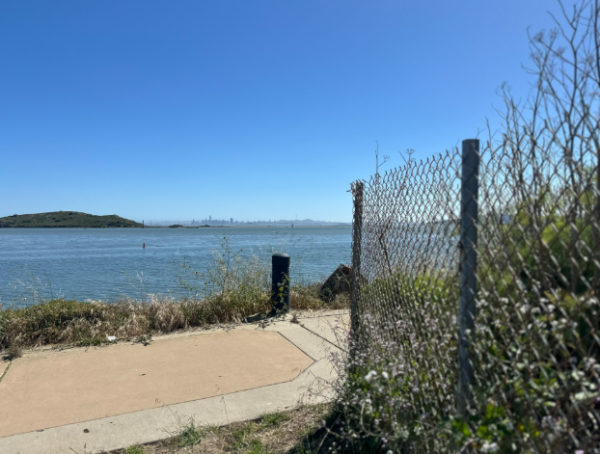
According to the planning commission’s meeting on March 5, TRAC’s chair Bruce Beyaert believed the project should be required to include amenities for the Bay Trail like “benches, tables, and water fountains,” an expectation set by past housing projects on the waterfront.
The landscaping plan, which was approved by the planning commission at their meeting, would cover landscaping for 25% of the site—coverage that exceeds the minimum standards according to the Richmond Municipal Code.
A key subject of controversy throughout the public hearing was that of the San Francisco Bay Conservation and Development Commission (BCDC) permit. A BCDC permit is a marker of approval required by the commission for projects that alter land, water, or structures within its coastal zone, or a 100-foot wide strip of land beginning at the edge of the Bay.
According to Guardian Real Estate’s land-use attorney, Brian Winter, the developers had been unsuccessful in their attempts to receive a BCDC permit.
“We attended, I believe, two hearings in front of the BCDC Design Review Board, and they were unequivocally clear that they desired that we pull the project completely back from the 100-foot shoreline band,” Winter said.
Beyaert argued that these continued denials of a BCDC permit are indicative of a more severe issue at hand with the housing proposal and its adherence to regulations. He claimed that Parcel C, as established in recent iterations of the project, was an attempt to avoid obtaining the BCDC permit.
“The desire is completely understandable. Filing an application obtaining BCDC approval would delay building or selling houses and making a profit on their investment,” Beyaert claimed, further arguing that it was “inconceivable that BCDC would not improve public access improvements in the Shoreline Band. That is their mission.”
Under strict limitations due to SB 330, the council could not withhold their approval until the BCDC permit was obtained because of the implications of reliance on a third-party’s approval.
“If this project were conditioned on a future discretionary approval for an agency that the city has no control over and can’t guarantee. It undermines the entitlement that the city is otherwise issuing because of the Housing Accountability Act and SB. 330,” said Eric Phillips, a land-use and real estate lawyer serving as outside counsel for the city.
The housing project passed 4-0 with Councilmembers Zepeda absent and Councilmember Rabana, who sought to delay the vote to allow parties to sort out issues, abstaining.
The planning commission’s revised conditions after the appeals requires that Guardian Real Estate submit a detailed design package for landscaping and public access of Parcel C which will then be incorporated into the Lucretia Edwards Shoreline Park, making the city and homeowners responsible for its long-term upkeep as part of the public park system.
Beyaert felt that the current conditions would trouble the city with permit acquisitions and expenses that would normally be dealt to the developers.
“The fundamental question here is why the city of Richmond would want to burden its already heavily loaded planning division and public works division staff with obtaining a BCDC permit for this developer and managing a construction project,” Beyaert said.
President of the Marina Bay Neighborhood Council, Margarita Mitas, also questioned the developers’ lack of responsibility for the parcel with the project’s current conditions.
“These conditions shift the responsibility from the developer to the city, the HOA, and ultimately Marina Bay residents. If the applicant is not taking responsibility for the required improvements, then who’s paying for it?” Mitas asked.